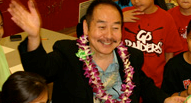
In July 2006, I had the opportunity to meet Akiko Yamakawa and Yurika Nozaki. This encounter led us to an introduction to a remarkable individual—Morio Matsui, a distinguished painter whose life and work left a profound impact on the art world.
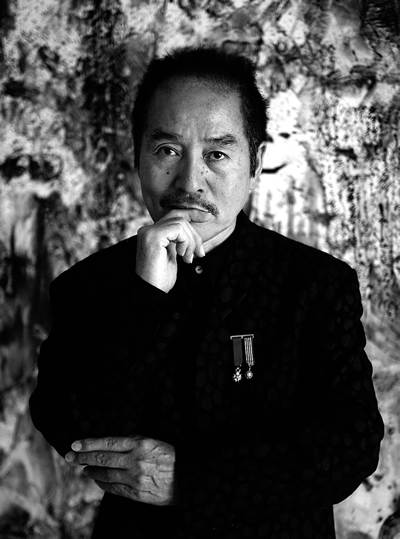
Matsui was born in 1942 in Toyohashi, Japan, and later established himself as a Western-style painter residing on the island of Corsica, France. After graduating from the Department of Oil Painting at Musashino Art University, he moved to France as a government-sponsored scholarship student. He studied at the Académie Julian (Atelier Guance) from 1967 to 1968 and at the École nationale supérieure des Beaux-Arts in Paris (Atelier Singier) from 1967 to 1972. It was during this period that he encountered Pablo Picasso, who recognized his artistic talent. When he met Picasso, Picasso said,
“This fellow has eyes of a feverish fight with real swords such that I might be outstripped some time.” Picasso also said, “You will become a painter like me, however, don’t try to be me, but Morio Matsui yourself.”
For three decades, Matsui based his career in Paris, struggling to establish himself in the competitive world of art.
Despite facing hardships, his breakthrough came in 1985 when he presented Testament, a piece he regarded as his final work. This painting, characterized by intricate brushstrokes using a mensō-fude (a traditional Japanese fine brush made in his hometown), gained widespread acclaim for its depth and meticulous detail. In 1997, he relocated to Corsica following a successful exhibition at the Fesch Museum. His unique appearance—creating art while dressed in traditional Japanese attire—earned him the nickname “The Samurai Painter.”
In 2005, Matsui returned to Japan as the representative artist of France at the Aichi World Expo. His accomplishments were widely recognized in France, where he received the Chevalier des Arts et des Lettres in 2000 and the Légion d’Honneur in 2003, making him the first Japanese painter to be honored with this prestigious award. He was hailed as “The Treasure of France,” a testament to his extraordinary career and talent.
Matsui’s passion for art extended beyond his personal achievements—he was deeply committed to art education. When he visited Hawaii, he graciously held a lecture and live painting demonstration at the Art Board. He had a strong desire to paint with children, believing in the power of art to inspire young minds. To fulfill this wish, we arranged a workshop at Iolani School in Hawaii with the help of Cherri Keafer, an art teacher there. He conducted sessions with students of all ages, from elementary to high school.
One particularly memorable moment was when he painted with the younger children. With their hands covered in paint, he climbed onto tables, filling the canvas together in a burst of uninhibited creativity. It was as if pure joy had erupted from their souls, embodying the famous saying, “Art is an explosion!” This phrase seemed to encapsulate Matsui’s entire life—one of relentless artistic passion and expressive energy.
Sadly, I had not seen Matsui since 2008, and it is with great sorrow that I learned of his passing in 2022. He was one of the people I had hoped to meet again. I will always cherish the memories of our encounters, and I offer my deepest prayers for his peace.